

Rio Aporé
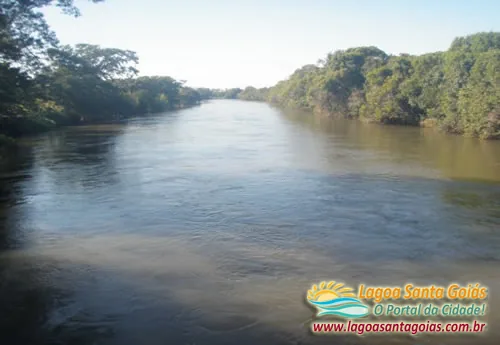
The wide, fast-flowing river that marks the border between Goiás and Mato Grosso do Sul and receives the warm waters of the lagoon.
Updated on 2026-10-08
Visitors who come to Lagoa Santa, in the state of Goiás, Brazil, thinking only of the hot-spring lagoon are usually surprised by the Rio Aporé. Wide, rocky-bedded and fast-flowing, it runs along the edge of town and is the municipality's second attraction: this is where the boat trips, the sport fishing and the region's most beautiful late afternoons happen. This article explains where the river rises and empties, how to enjoy it safely and why it and the lagoon are connected.
Geography: a river that separates two states
The Rio Aporé, which older residents also call Rio do Peixe ("Fish River"), is roughly 200 km long. Along its entire course it serves as the natural border between Goiás, on the left bank, and Mato Grosso do Sul, on the right. Lagoa Santa sits on the Goiás side; across the water is already Mato Grosso do Sul territory.
The river flows south and empties into the Rio Paranaíba, which in turn forms the Rio Paraná. That places the Aporé within the great Paraná basin, which explains the variety of fish and the fact that the river has stretches that differ sharply from one another: in some spots the water runs swift, with rapids over rocks; in others the river widens and turns calm, ideal for swimming and small boats.
The rocky bed is a defining feature. Instead of muddy banks, much of the shoreline consists of slabs and blocks of stone, which leaves the water cleaner than that of clay-bottomed rivers. In the dry season, between May and September, the level drops, the rocks emerge and the river turns clearer. In the rains, from October to March, it rises, darkens and gains force.
The link with the thermal lagoon
The thermal lagoon produces about 3.6 million liters of water per hour. All that water has to go somewhere, and its destination is the Aporé: a channel carries the overflow from the springs to the river. As a result, near the mouth of the channel the river water is slightly warmer than normal, and it is common to see fish gathered at that point, drawn by the temperature and the clarity.
This connection is also why the lagoon never overflows or "stagnates": it works like a giant spring that feeds the river continuously.
Boat trips and water sports
The boat trip is the most popular activity on the river. Boats leave from the bank near town and head up or down the Aporé along calm stretches, with stops at small rocky beaches and spots where you can swim. A typical trip lasts one to two hours; in the late afternoon, with the sun sinking over the Mato Grosso do Sul shore, the scenery is the best of the whole trip.
There is no established boat-tour company with a ticket office. The trips are run by residents and by the guesthouses, so the safest route is to ask at your lodging or at CIAT, the Integrated Tourist Support Center, phone (64) 3640-1224 (from abroad: +55 64 3640-1224), who is running trips at the time of your visit and what they charge. Agree beforehand on duration, number of people, whether life jackets are included and whether there is a stop for swimming.
Kayaks and stand-up paddleboards also work well on the calm stretches, but you need to bring your own equipment, as there is no regular rental in town.
Fishing on the Aporé
The Aporé is Lagoa Santa's main fishing spot and draws anglers from Goiás, Minas Gerais, São Paulo and Mato Grosso do Sul. Species common to the Paranaíba basin, such as pintado (spotted sorubim catfish), dourado (golden dorado), pacu, piau and traíra (wolf fish), turn up in the river, with the best season in the dry months. Everything about licenses, the spawning closure, equipment and the town's Fishing Festival is gathered on the Fishing in Lagoa Santa page.
Safety on the river
The Aporé is a real river, with current, submerged rocks and deep stretches. It has none of the gentleness of the thermal lagoon. Treat every entry into the water as a decision, not an automatic plunge.
- Life jackets on any boat, for everyone, including strong swimmers. Check that the boat has enough jackets before boarding.
- Do not dive headfirst from rocks or banks. The rocky bed is uneven and the depth changes within a few meters.
- Avoid swimming in rapids and at spots where the water suddenly changes color, a sign of a deep pool or a current.
- Children always in life jackets and within arm's reach. Rocky beaches look shallow, but the edge drops off fast.
- Heavy rain upstream makes the river rise within a few hours, even with sunshine in town. In the rainy season, ask residents before going in.
- Alcohol and rivers do not mix. Most river accidents in Brazil's Center-West involve drinking.
- In an emergency, the Lagoa Santa Emergency Hospital (Hospital de Pronto Socorro) can be reached at (64) 3640-1267. More contacts in Useful phone numbers.
Where to see the river without getting your feet wet
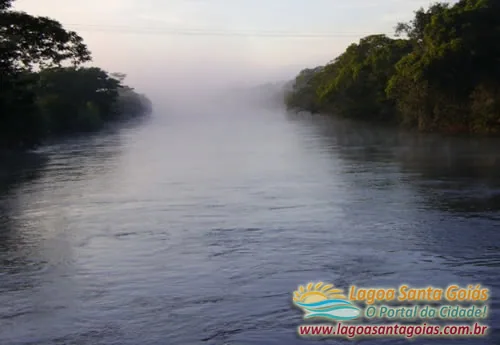
Some lodgings sit right on the bank of the Aporé; Pousada Sakura, for example, has a restaurant with a veranda facing the river, and it is a good place for a late afternoon even if you are not staying there. The highway bridge and the bank near downtown also offer fine views, especially at dawn, when mist rises from the river in the cold months. For photos, arrive before sunrise; in July, that means around 6:30 a.m.
Wildlife on the banks
The corridor of riparian forest along the Aporé concentrates a good share of the region's birds. Neotropic cormorants fishing, white-winged swallows skimming the water, whistling herons on the rocks and, with luck, blue-and-yellow macaws passing high overhead in the late afternoon. Capybaras show up on the quieter banks, especially at dusk. Bring binoculars if you enjoy birdwatching; the complete list of wildlife and vegetation is in Geography.
Can I swim in the Rio Aporé?
Yes, on the calm stretches and at the small rocky beaches, preferably with guidance from someone who knows the river. Avoid rapids and deep pools and never dive headfirst. The thermal lagoon remains the safest place for a swim, especially with children.
How do I book a boat trip?
Ask at your guesthouse or call CIAT at (64) 3640-1224. Trips are run by residents and local lodgings, with no fixed ticket office. Agree on duration, price and life jackets before boarding.
Is the Aporé the same river as the Rio do Peixe?
Yes. "Rio do Peixe" is the old local name for the Aporé in the region. On official maps and road signs it appears as Rio Aporé.
Why is the river water warm near town?
Because a channel discharges the overflow from the thermal lagoon into the river, about 3.6 million liters per hour at 31 °C. Near the mouth of the channel the water mixes and turns slightly warmer.
When is the best time to visit the river?
In the dry season, May to September, the river is lower, clearer and with its rocks exposed, which makes boat trips, fishing and photography easier. See the When to visit page.