

Camping in Lagoa Santa, Goiás: Camping Rei Inca and tips
A tent under the trees, hot springs nearby and the silence of Goiás' far south: the guide to camping in town.
Updated on 2026-10-08
Camping in Lagoa Santa, in the state of Goiás, Brazil, is a cheap and pleasant way to stretch out your trip. The town is small and quiet, has cool nights outside the summer months, and a protected woodland where you can pitch a tent with water and power close at hand. The main option is Camping Rei Inca; for those who want something between a tent and a guesthouse, there are igloo-style cabins on the same site. This guide covers the facilities, what to pack, the rules of good campsite manners, the best season and a rural alternative.
Camping Rei Inca: what it is like
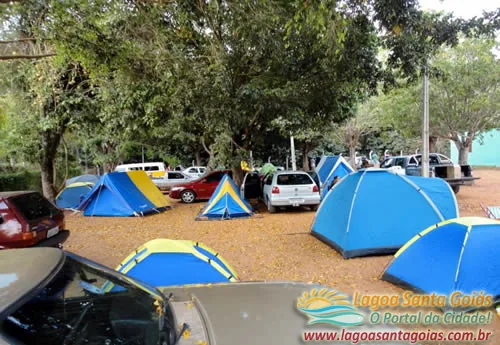
Camping Rei Inca sits in a protected woodland, shaded by native trees, and offers the basics a camper needs: water and power hookups and a tent area. The advantage over camping in open ground is precisely the shade: in southern Goiás the midday sun is punishing, and a tent under the trees stays livable even in the afternoon.
The contact number is (64) 3640-1224 (from abroad: +55 64 3640-1224), the same as the CIAT, the town's tourist information center. Call before traveling to confirm availability, the nightly rate per tent or per person, gate hours and whether there are changing rooms with hot showers. As the town has 1,390 inhabitants, the campsite facilities are simple and may not be open every day of the year.
The igloos: camping without a tent
Besides the tent area, Rei Inca has igloo-style cabins, small rounded structures with a campsite feel and a real roof. They are the right choice for anyone traveling with small children, for couples who do not want to haul gear, and for the rainy months, when a wet tent ruins the night. Ask how many people fit in each igloo, whether there is a bed or a mattress, a fan, a power outlet and a private bathroom. Rates are not published; ask.
What to pack
- A tent with a rain fly and a ground sheet: nights from June to August can get close to 10 °C, and the dew is heavy near the woods.
- A sleeping bag or blanket for winter; in summer, a sheet is enough.
- A flashlight and batteries: the woodland is dark at night, and lighting is sparse.
- Insect repellent and sunscreen: woods, water and heat mean mosquitoes at dusk.
- An extension cord and a plug adapter to make use of the power hookup.
- Drinking water or a portable filter: there is water at the campsite, but bring a reserve for the day at the lagoon.
- A camp stove, a pot and a lighter: the town's shops are small; stock up beforehand in Itajá or Paranaíba if you are coming from out of the area.
- Flip-flops, a towel and swimwear for the thermal springs, which are a few minutes away.
- Cash: not every establishment takes cards, and ATMs are limited.
Campsite rules
A small campsite in a small town runs on common sense. These are the rules that keep everyone out of trouble:
- Quiet after 10 p.m. Speakers are the main source of friction at campsites; use headphones instead.
- Fires only in designated spots. The woodland is protected, and the dry season (May to September) leaves the vegetation highly flammable. No campfires on the ground.
- Sort your trash and take it with you. There is no collection inside the woodland. Bring bags and remove everything when you leave.
- Pets: ask first; if they are allowed, keep them on a leash.
- Water and power are shared. Keep showers short, and no electric heaters running for hours.
- Respect the woods: do not cut branches, do not nail anything to the trees, do not feed wild animals.
Best time to camp
The most comfortable window runs from May to September: dry weather, almost no rain, warm days and cool nights, ideal for sleeping in a tent. It is also the season of mist over the hot-spring lagoon at dawn, a spectacle for early risers at the campsite. July is the coldest and busiest month, thanks to school holidays and the town's anniversary (July 21); book in advance.
From October to March it rains often, in heavy late-afternoon downpours. Camping is still possible, but it calls for a good tent, an extra tarp and a willingness to deal with mud. In those months the igloos are worth every penny. Carnalagoa, the town's Carnival in February, fills the town; if you plan to camp during the festivities, confirm your spot weeks ahead. More on the weather under When to go.
Summer rains and the riverbed. Never camp on your own on the banks of the Rio Aporé in the rainy season: the water level rises fast after storms upstream. Use the established campsites.
Alternative: Estância Flamarion
Anyone who wants to sleep out in the countryside with a bit more comfort might consider Estância Flamarion, a rural lodging about 2 km from the town center. It is an option for families who enjoy peace and quiet, waking up to birdsong and having a real bedroom without giving up the rural setting. Contact details and other places to stay are on the Lodging in Lagoa Santa page, in the rural lodging section.
Fitting the campsite into the rest of your trip
From the campsite, the routine that works is this: morning at the hot-spring lagoon, lunch in town (see Where to eat), afternoon on the Rio Aporé or at Balneário Kin Gin, and back to the tent before dark. Anglers usually head to the river before dawn; ask at the campsite about gate hours.
How much does it cost to camp at Camping Rei Inca?
The rate is not published. Call (64) 3640-1224 and ask for the nightly rate per tent or per person, and the price of the igloos, which is usually different.
Can I camp without bringing a tent?
Yes. Rei Inca has igloo-style cabins, small roofed structures that do away with the need for a tent. Confirm capacity and what is included.
Is the campsite near the hot-spring lagoon?
Lagoa Santa is a small town and everything is a few minutes away by car. The natural lagoon is in the Thermas complex on the GO-302 highway, Km 19; combine the visit with a day pass. See Thermas Lagoa Santa.